10 Japandi Dining Chairs That Will Transform Your Dining Space

Ever feel like your dining room just doesn’t “spark joy” anymore? Maybe it feels too cluttered… or, on the flip side, too cold and lifeless? That’s exactly where 10 Japandi dining chairs come in. This hybrid style — part Japanese minimalism, part Scandinavian coziness — creates the kind of dining vibe that feels both calming and effortlessly stylish.
I stumbled upon Japandi design a couple of years ago while hunting for ways to make my small apartment feel bigger and warmer. Let’s just say… I’ve been obsessed ever since. And when it comes to dining chairs? Japandi style dining chairs are like the unsung heroes of the trend — functional, beautiful, and surprisingly versatile.
So, if you’ve been itching to give your dining area a refresh without going overboard, let me walk you through 10 amazing Japandi dining chairs that blend form and function like no other.
1. The Classic Wooden Japandi Dining Chair
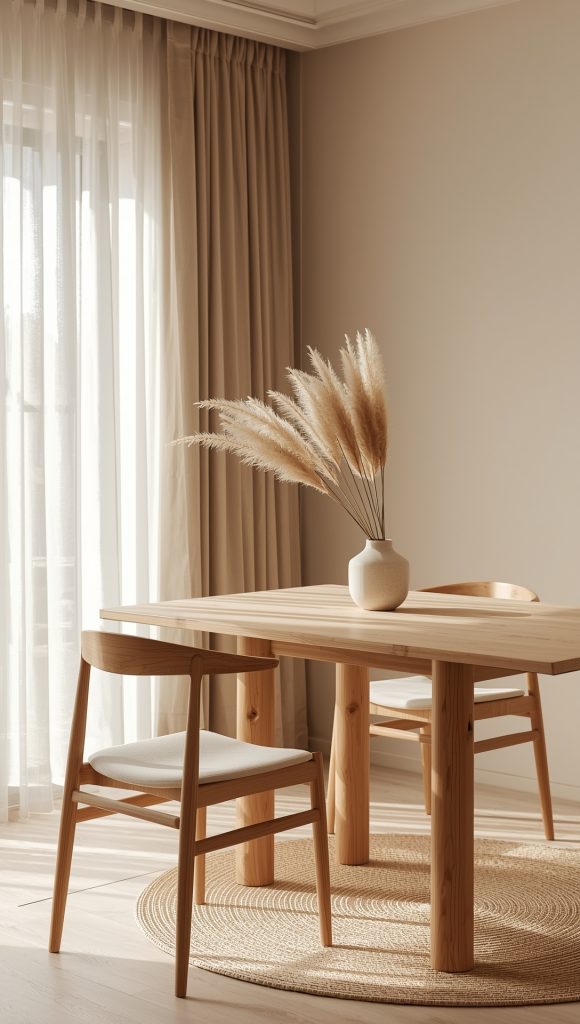
You can’t talk Japandi without talking wood — it’s literally the backbone of this style. Wooden Japandi dining chairs often use light woods like oak or ash, giving off a natural, airy vibe that feels straight out of a Zen garden.
Why they work so well:
- They instantly warm up modern, minimal spaces.
- The craftsmanship usually highlights the wood grain, making each chair unique.
- Light wooden tones pair beautifully with neutral Japandi palettes — think soft beiges, whites, and muted greys.
Pro tip: Pair them with a matching wooden dining table for that cohesive “I’ve got my life together” look.
2. Minimalist Japandi Dining Chairs with Clean Lines
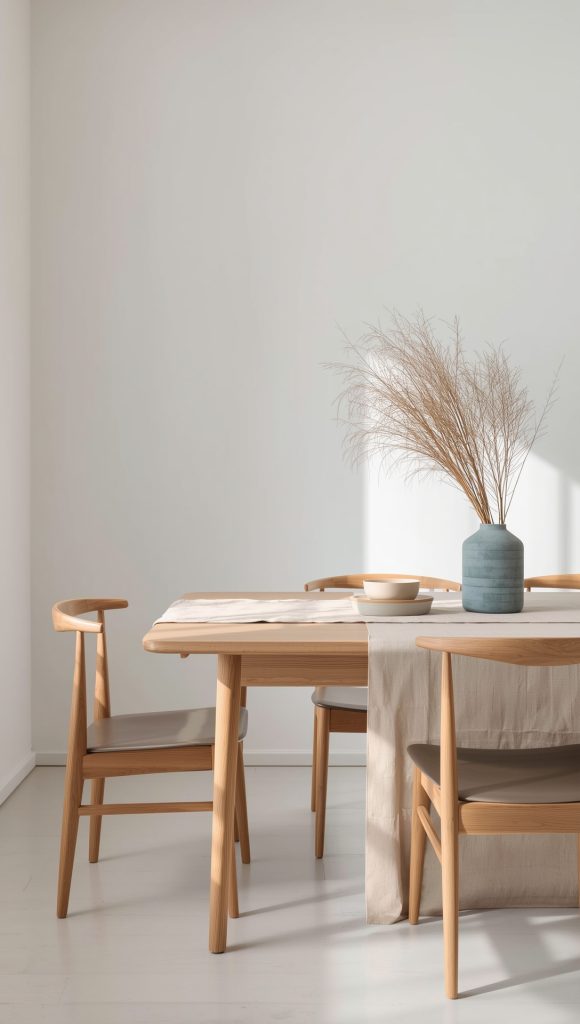
If you’re leaning toward minimalist Japandi dining chairs, look for pieces with simple silhouettes — think straight legs, low backs, and subtle curves. These chairs prioritize function but still bring plenty of style.
Key features to love:
- No unnecessary frills (bye-bye, bulky cushions and carvings).
- Neutral fabrics like linen or cotton that complement natural wood.
- Perfect for small spaces where visual clutter is the enemy.
Question for you: Isn’t it wild how something so “plain” can actually look so sophisticated?
3. Scandinavian Japandi Dining Chairs with Upholstered Comfort
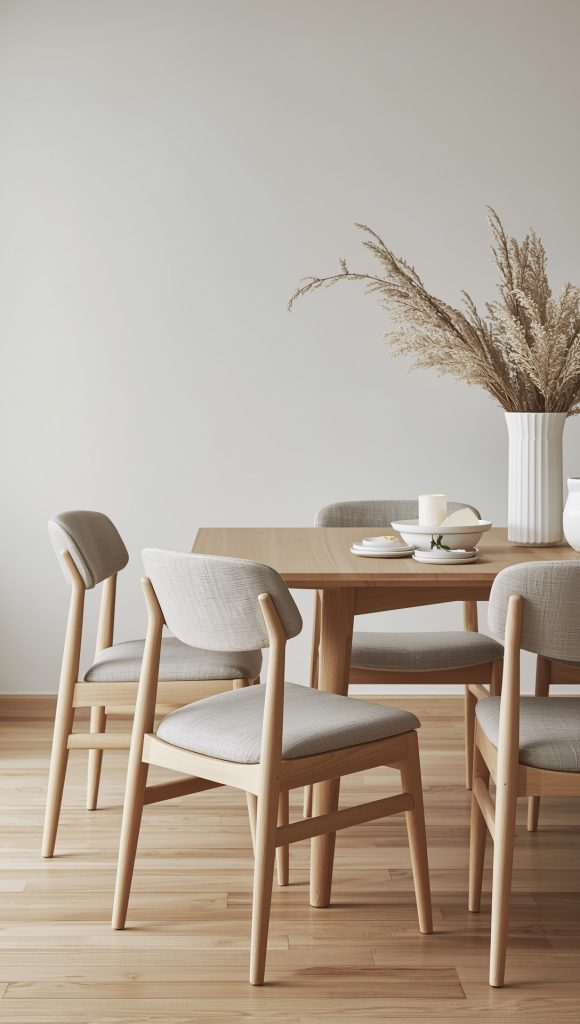
Japandi may celebrate minimalism, but that doesn’t mean you have to sit on rock-hard wood all night. Scandinavian Japandi dining chairs often bring in upholstered seats — adding a cozy touch without losing that sleek aesthetic.
Why you’ll adore them:
- Upholstery softens the look and adds warmth.
- Great for families or dinner parties where comfort is key.
- Can mix fabric tones (muted blue, soft grey) for subtle visual interest.
4. Modern Japandi Dining Room Chairs with Metal Accents
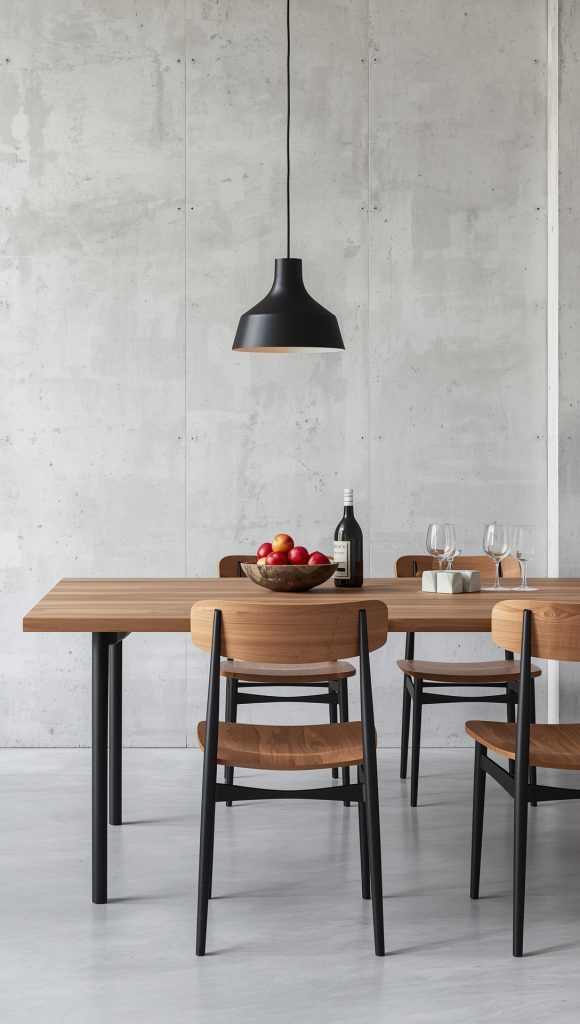
Want to spice things up a bit? Some modern Japandi dining room chairs combine wood with metal — usually black or muted steel — for an industrial-meets-Zen vibe. It’s perfect if you’re not ready to go fully rustic.
- Metal frames keep things lightweight yet sturdy.
- Works beautifully in urban apartments or loft-style spaces.
- Adds just enough edge without overpowering the Japandi calm.
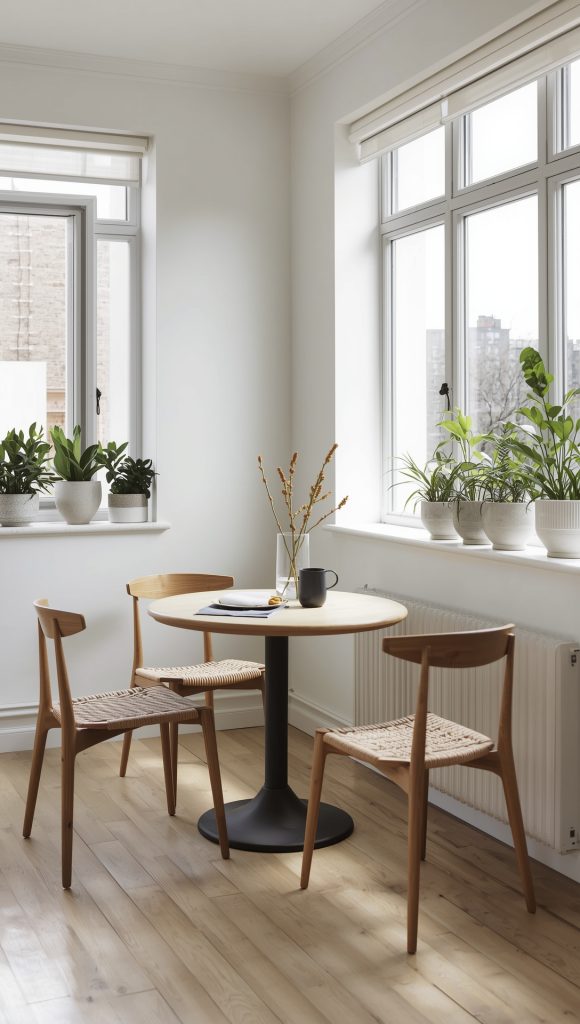
5. Low-Back Japandi Chairs for Small Spaces
Low-back chairs are a total win for tiny dining rooms. They keep sightlines open, making the room feel bigger — and they’re very in tune with Japanese low-profile furniture traditions.
Perks include:
- Easier to tuck under the table = more walking space.
- Creates a minimalist, clutter-free silhouette.
- Pairs perfectly with round or rectangular tables.
6. The Iconic Wishbone-Style Japandi Chair
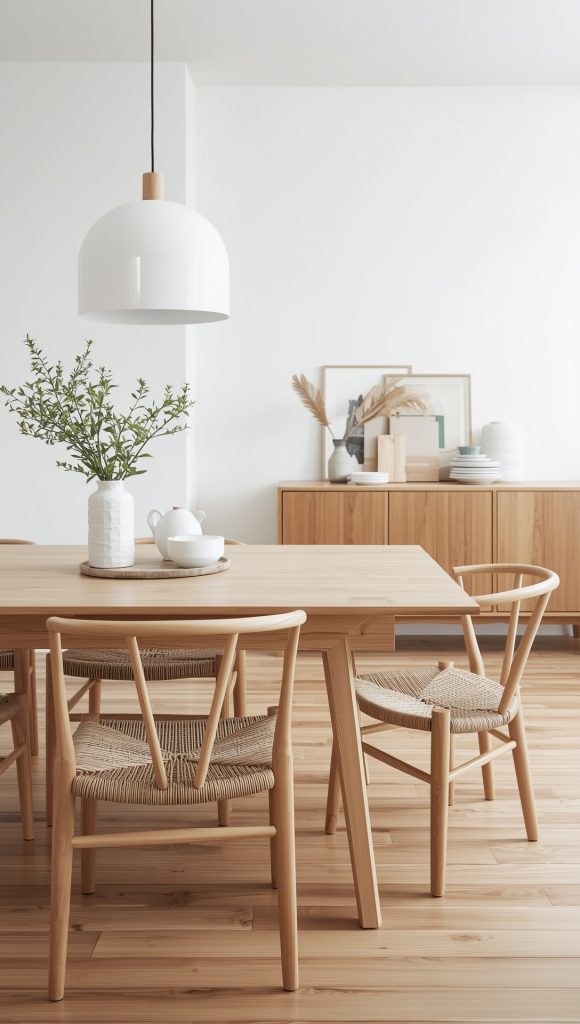
If you’ve scrolled Pinterest lately, you’ve seen this one. The wishbone chair — with its curved back and woven seat — is practically the poster child of Japandi interiors.
What makes it iconic?
- It blends Scandinavian craftsmanship with Japanese-inspired simplicity.
- The woven seat adds organic texture (plus, it’s surprisingly comfy).
- It works equally well in casual kitchens and formal dining spaces.
7. Japandi Armchairs for a Cozy Statement
While most Japandi dining chairs keep things stripped-down, adding a couple of Japandi armchairs at the head of your table can create a subtle focal point. These bring a sense of hospitality and comfort, almost like saying, “Hey, sit and stay awhile.”
- Ideal for mixing and matching with simpler side chairs.
- Great for larger dining rooms that need a bit of visual weight.
- Armrests add that little luxury factor (and let’s be honest, we love it).
8. Upholstered Japandi Chairs with Neutral Tones
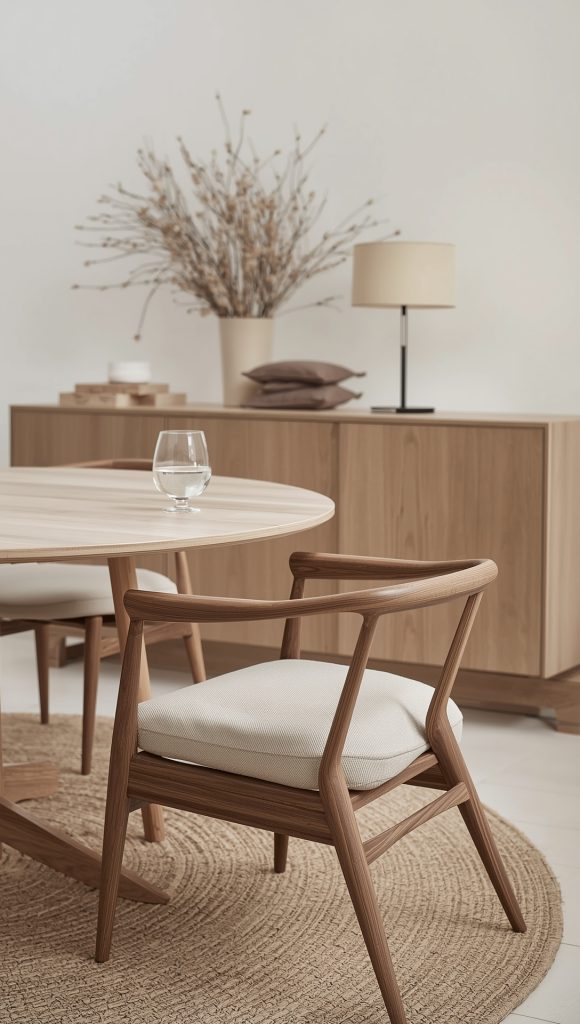
Love soft seating but want to stay true to Japandi’s earthy vibe? Go for upholstered chairs in neutral tones — think ivory, warm beige, or muted sage. They’ll keep your space grounded and serene.
Bonus points: Neutral fabrics are super forgiving (hello, kid-friendly and pet-friendly design).
9. Hybrid Japandi Bench + Chair Combos
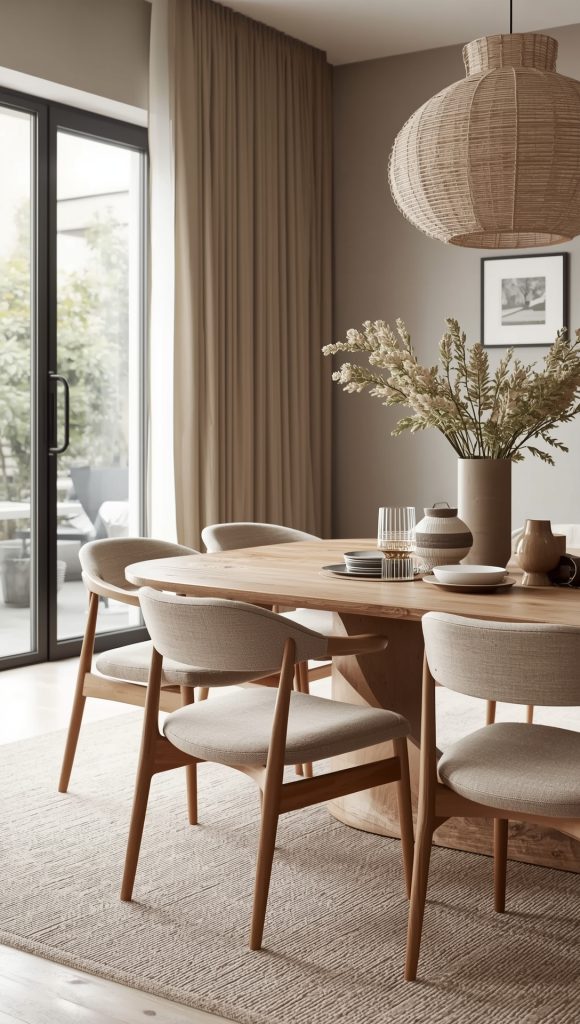
Okay, technically not just chairs — but hear me out. Using a bench on one side of your dining table and chairs on the other is peak Japandi functionality. It’s space-saving, flexible, and oh-so-stylish.
- Great for families or anyone who hosts friends regularly.
- Keeps seating flexible without mismatched chaos.
- Adds casual charm to formal dining setups.
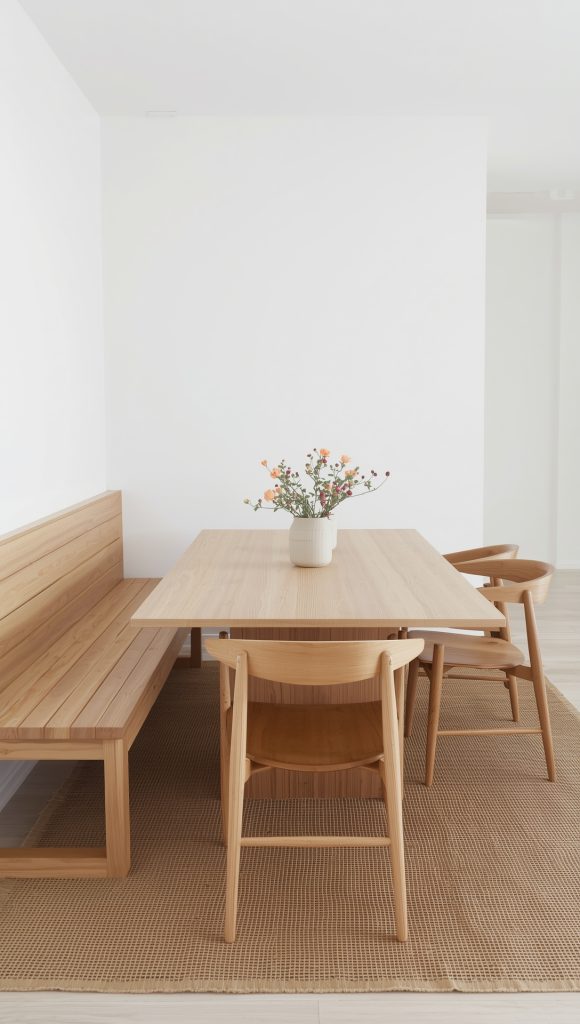
10. Statement Japandi Chairs with Sculptural Backs
Who says Japandi can’t be bold? Some designers are experimenting with sculptural backs — soft curves, asymmetric lines — that still honor the “less is more” principle.
- They double as art pieces when not in use.
- Perfect if you want a conversation starter without loud colors.
- Pair with a simple table to keep balance in the room.
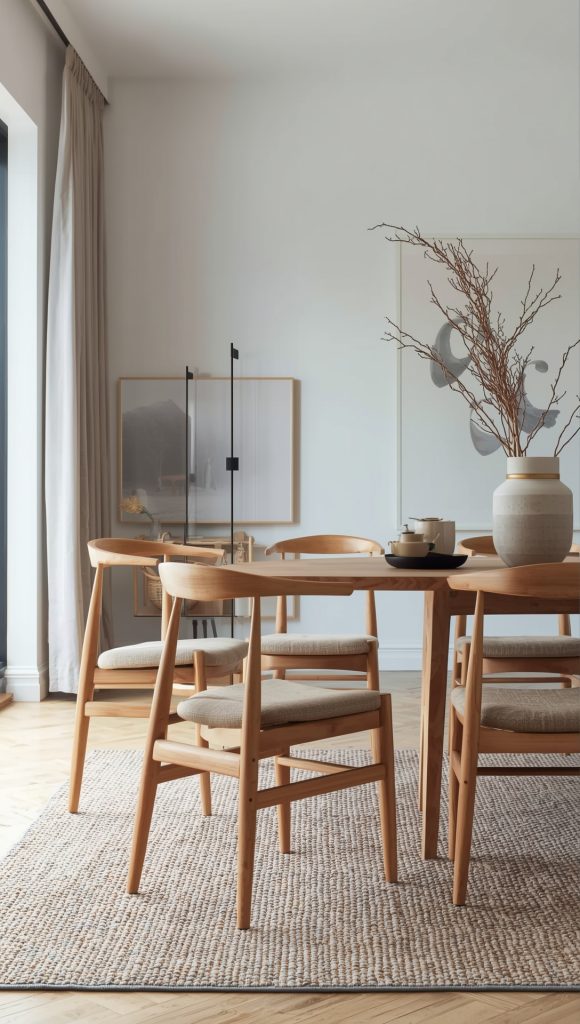
How to Choose the Perfect Japandi Dining Chair
Feeling overwhelmed by the options? Here’s a quick breakdown to help you decide:
1. Consider Your Space
Small apartment? Go for low-back or armless designs. Bigger room or office workspace? Mix in statement chairs or armrests.
2. Stick to Natural Materials
Wood, linen, rattan, and muted metals = Japandi gold. Avoid high-gloss plastics or anything too flashy.
3. Color Palette Matters
Stay within soft neutrals: whites, creams, muted greys, light woods. Pops of black can add contrast without breaking the vibe.
4. Comfort vs. Minimalism
Do you host long dinners or quick meals? If comfort is key, consider padded seats or curved backs.
Styling Tips for Your Japandi Dining Room
Now that you’ve picked your chairs, how do you make the entire space feel cohesive?
- Pair with the right table: Light wood tables with clean lines are ideal.
- Add texture through textiles: Linen table runners or woven placemats can warm things up.
- Keep décor minimal: A single ceramic vase or a small bonsai can do wonders.
- Play with lighting: Pendant lamps in natural fibers (like rattan) complete the look.
Why Japandi Chairs Are Worth the Hype
Honestly? These chairs aren’t just a passing trend. The reason people (myself included!) keep coming back to them is because they hit that sweet spot between beauty and practicality. They don’t scream for attention, yet they completely transform a dining room’s vibe.
And let’s not forget — Japandi design encourages mindful living. Every piece serves a purpose, and that’s kind of refreshing in today’s “buy more, do more” culture, right?
Final Thoughts
So, which of these Japandi dining chairs is calling your name? Whether you’re drawn to the warmth of wooden Japandi dining chairs, the sleekness of minimalist Japandi dining chairs, or the cozy vibe of Scandinavian Japandi dining chairs, there’s an option here that’ll totally level up your dining space.If you’ve been craving a home that feels calm yet modern — like a sanctuary you actually want to hang out in — Japandi is 100% worth exploring. Trust me, once you go Japandi, it’s hard to go back.