Transform Your Workspace: 10 Japandi Office Ideas to Boost Calm and Creativity
So, you’ve been eyeing that clean, minimalist office aesthetic all over Pinterest and wondering, “How do I actually pull this off at home?” Well, let me let you in on a secret: Japandi style—a perfect blend of Scandinavian coziness and Japanese minimalism—might just be the vibe you’re after.
I remember when I first stumbled upon this style while trying to ditch the chaos of my messy desk (hello, random coffee mugs and cables everywhere). Once I embraced Japandi office decor ideas, my workspace didn’t just look better; it felt calmer. And honestly? It changed the way I worked.
If you’re curious about how to bring this aesthetic into your home office, grab your coffee and let’s talk 10 Japandi office ideas you can actually pull off.
1. Start with a Neutral Color Palette
When you think of a Minimalist Japandi workspace, what colors come to mind? Probably soft whites, earthy beiges, and muted greys, right? That’s exactly what you want.
Why Neutral Works
- It creates a calm, distraction-free zone for focused work.
- Pairs perfectly with natural wood tones (a Japandi must-have).
- Makes small spaces feel bigger (win-win if you’re working in a tiny apartment).
Pro tip: Avoid super bright whites—they can feel sterile. Instead, go for warm undertones, like cream or light taupe, to keep it cozy yet clean.
2. Go Minimal, But Not Empty
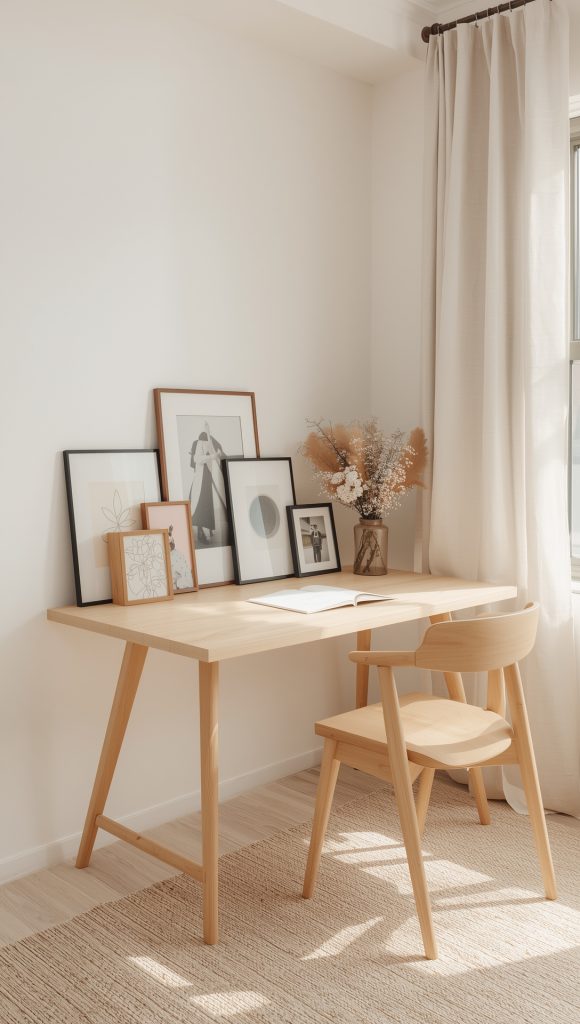
Minimalism is at the heart of Scandinavian Japanese office style, but don’t confuse that with having nothing in your workspace. The key is intentional simplicity—keeping only what sparks joy (yes, Marie Kondo vibes).
What to Keep on Your Desk
- A small plant (think bonsai or snake plant).
- One or two decorative objects, like a ceramic mug or wood tray.
- Essential work tools—laptop, notebook, pen.
Question for you: Could you work better if everything around you felt purposeful?
3. Invest in Japandi Office Furniture
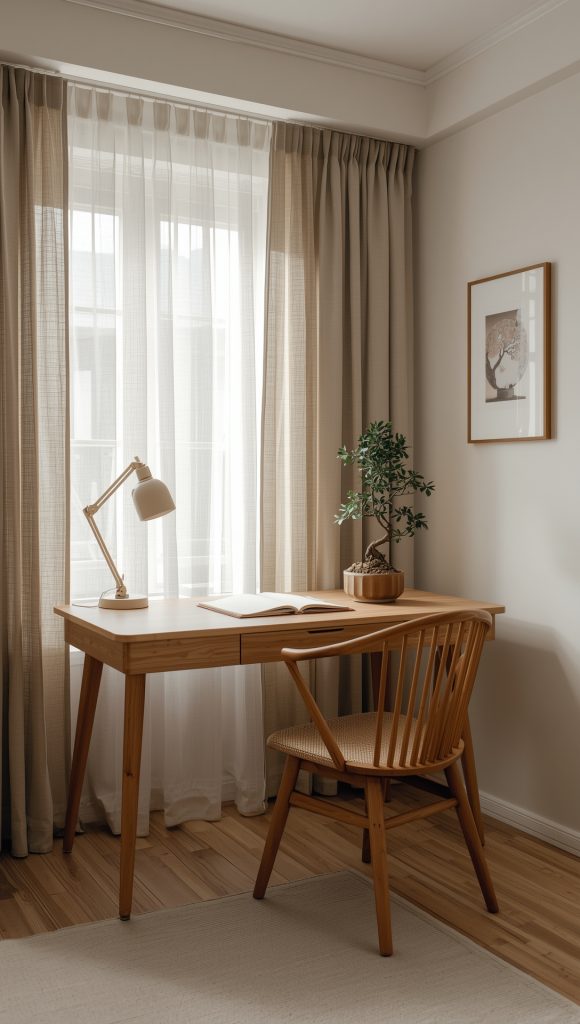
This style thrives on quality over quantity. Think: solid wood desks, ergonomic chairs with simple lines, and modular shelving. Bonus points if the furniture mixes light Scandinavian woods (oak, ash) with Japanese dark accents (walnut, black metal).
Japandi Office Furniture Inspiration
- Low-profile wooden desk with rounded edges.
- Linen or rattan desk chair cushions.
- Open shelving to showcase pottery or plants without clutter.
IMO, this is where you should splurge—your desk and chair are the heart of your office, and Japandi pieces age beautifully.
4. Add Natural Textures Everywhere
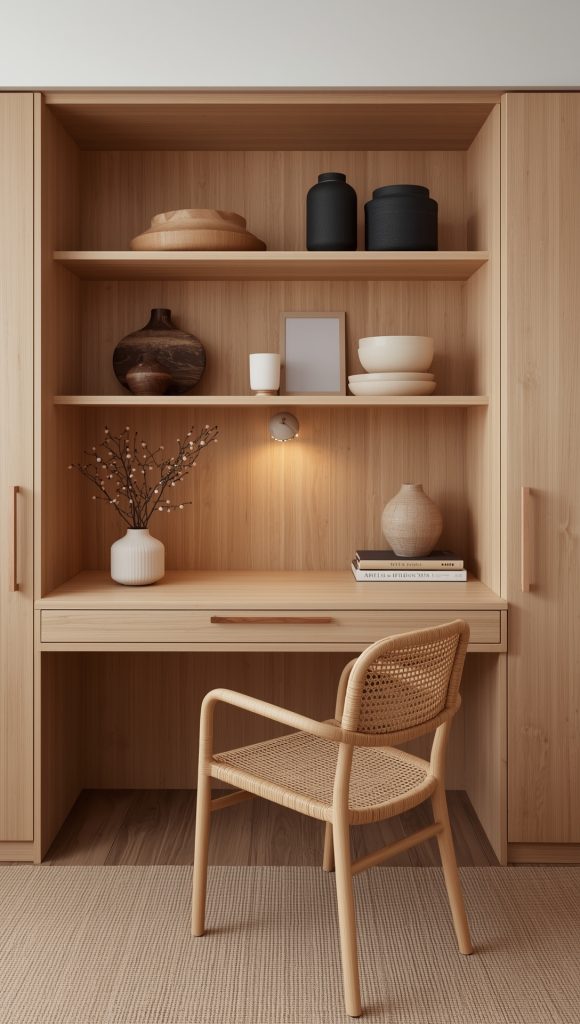
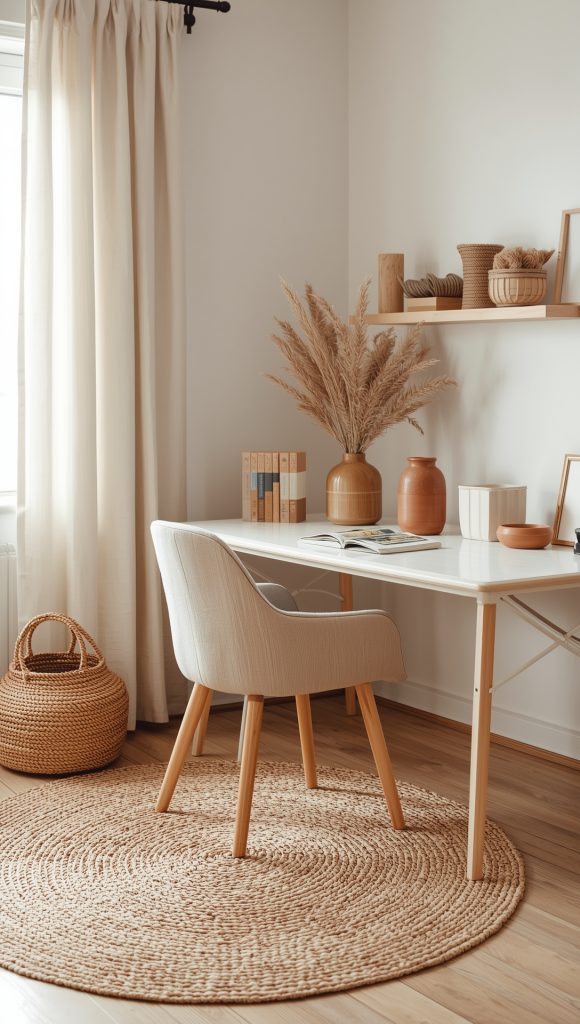
Japandi isn’t just about what you see; it’s about what you feel. Adding natural textures—like linen curtains, bamboo storage boxes, or wool rugs—creates a warm, tactile vibe.
Textures That Work
- Linen desk runners or curtains.
- Jute or wool rugs under your chair.
- Clay or ceramic planters for plants.
FYI: This trick instantly softens tech-heavy setups (laptops, monitors) that can otherwise look sterile.
5. Keep Lighting Soft and Warm
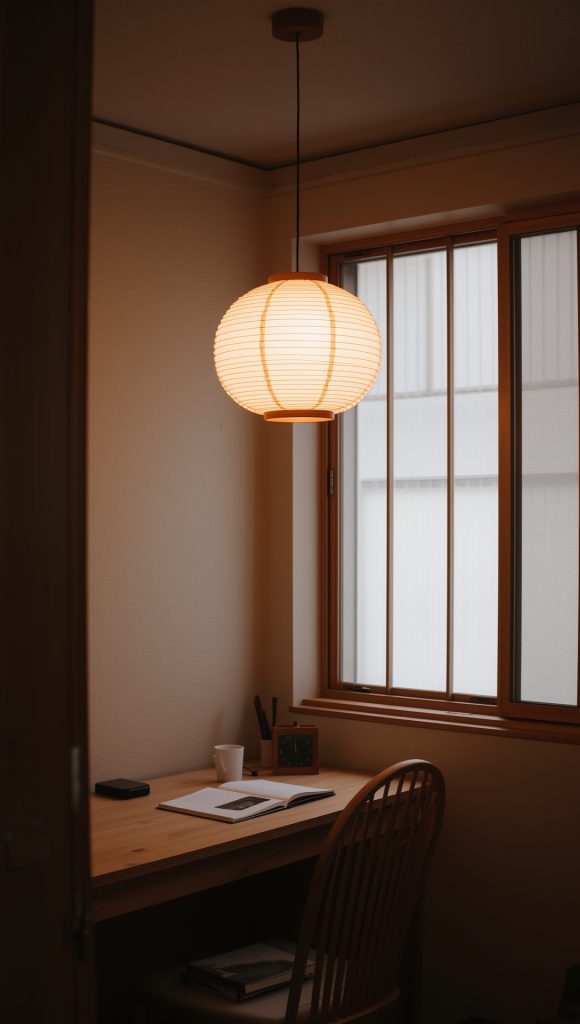
Ever notice how harsh white lights make you feel like you’re in an office cubicle from 1999? Yeah, no thanks. Japandi calls for soft, diffused lighting that mimics natural sunlight.
Lighting Tips
- Opt for paper lanterns or linen lampshades for diffused glow.
- Use warm LED bulbs (around 2700K–3000K).
- Position your desk near a window if possible for natural light therapy.
6. Introduce Greenery (But Keep It Low-Maintenance)
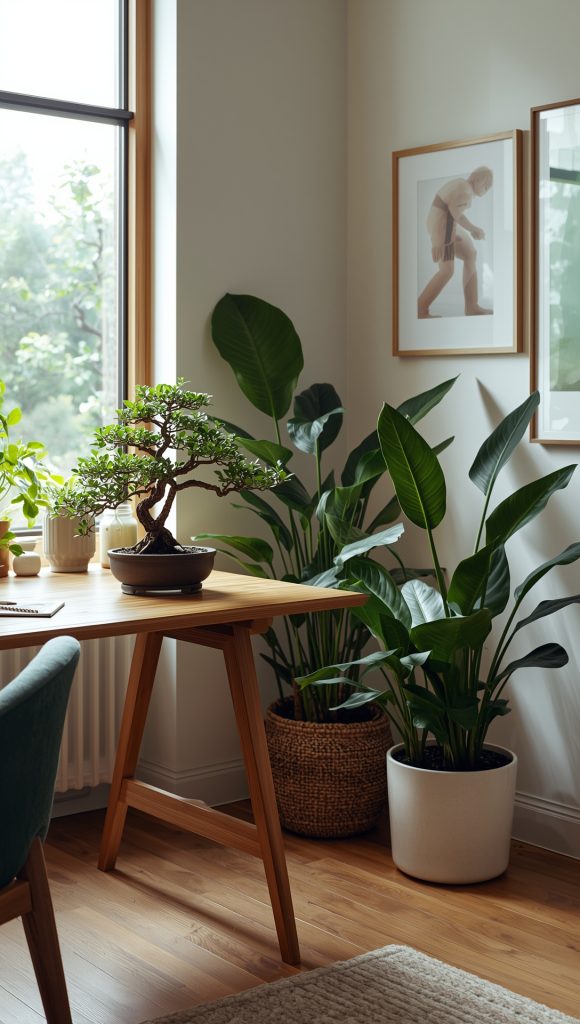
Plants aren’t just decor—they’re mini stress-relievers. In Japandi home office design, greenery adds life without overwhelming the space.
Best Plants for Japandi Offices
- Snake plant (hard to kill and loves low light).
- Monstera (big leaves = big statement).
- Bonsai tree (perfect nod to Japanese tradition).
Place them strategically—like a single plant on your desk and one floor plant in the corner. Less is more here.
7. Incorporate Wabi-Sabi Principles
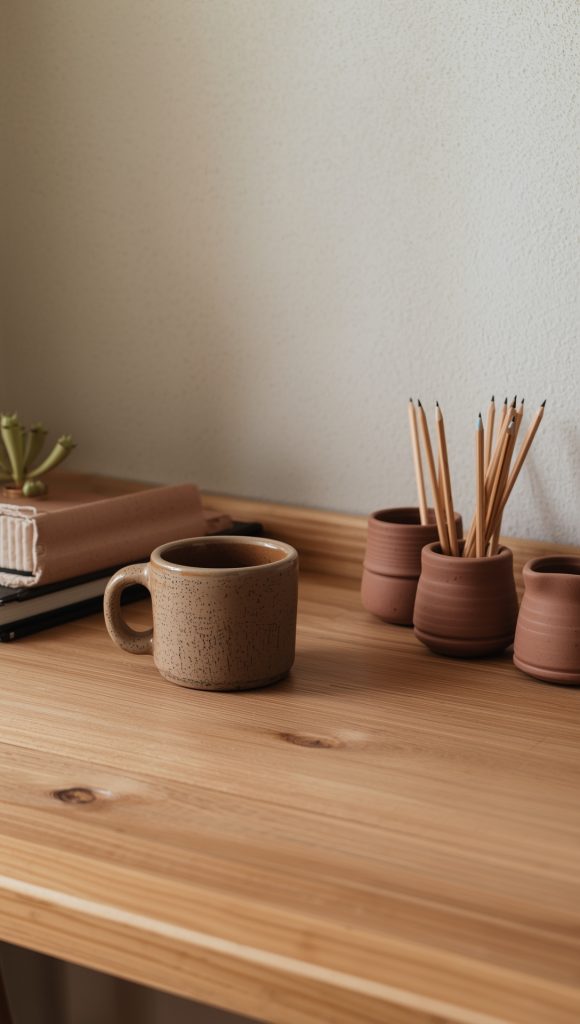
Wabi-sabi is the Japanese concept of finding beauty in imperfection. A slightly uneven ceramic mug? Gorgeous. A rustic wooden desk with knots? Perfect.
How to Apply Wabi-Sabi
- Embrace handmade pottery for pencil holders or mugs.
- Choose reclaimed wood furniture with visible grain.
- Avoid overly polished finishes—natural wear tells a story.
This mindset not only looks amazing but also keeps you from obsessing over perfection (which, let’s be real, can kill productivity).
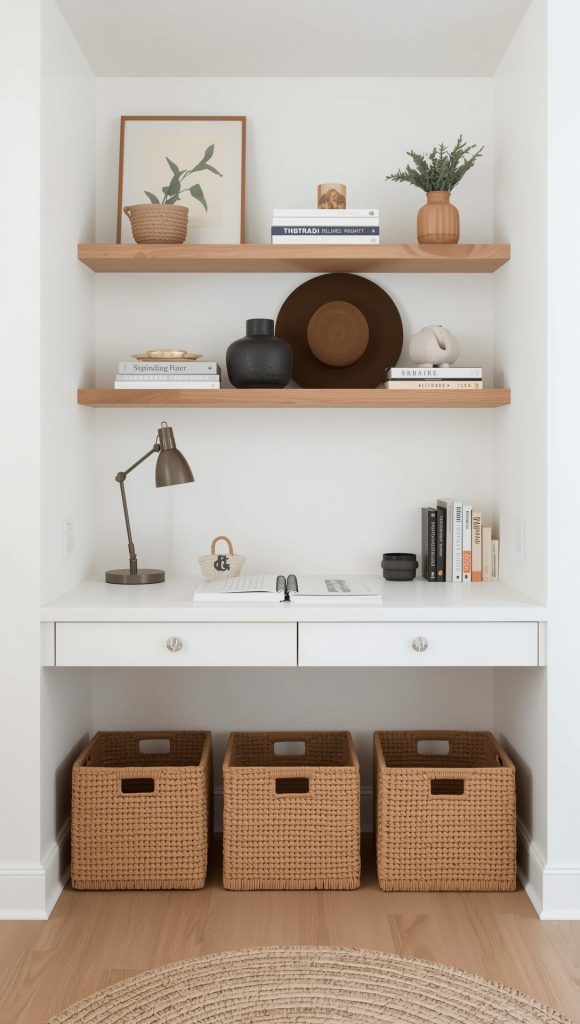
8. Use Functional Storage (Hide the Mess)
One thing I learned quickly: Japandi may look minimalist, but we all have stuff. The trick is functional storage—concealing clutter without sacrificing style.
Storage Hacks
- Woven baskets for cables and chargers.
- Floating shelves for books and decor.
- Drawer organizers for stationery (no more rogue paperclips!).
Bold move: Declutter weekly. If you haven’t used it in a month, do you even need it.
9. Blend Scandinavian and Japanese Accents
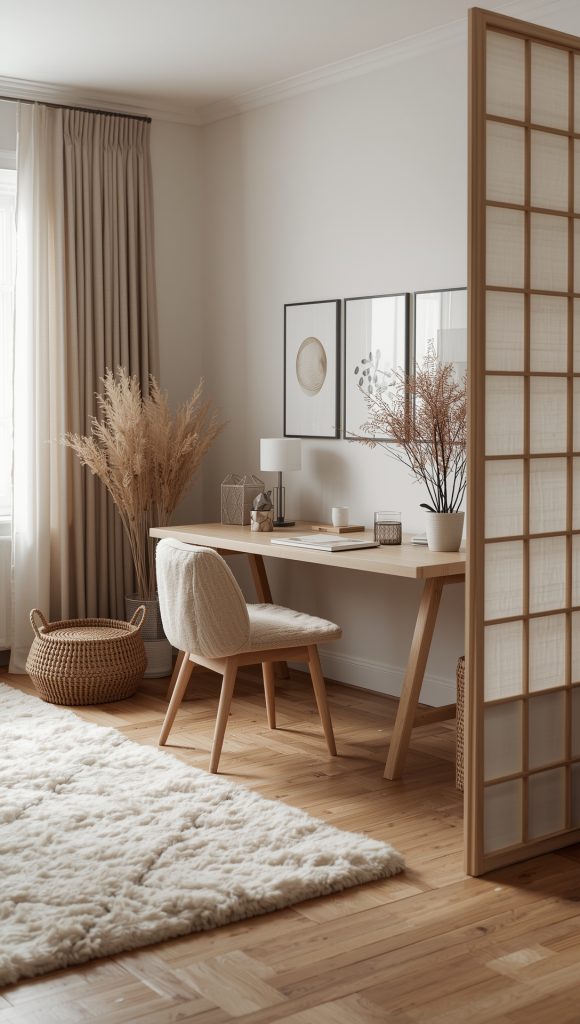
Here’s where Japandi magic really happens: mixing the two styles seamlessly. Scandinavian design brings coziness; Japanese design brings minimalism. Together? Chef’s kiss.
Accent Ideas
- Scandinavian: soft textiles, cozy rugs, hygge vibes.
- Japanese: sliding screens, tatami mats, low wooden furniture.
Try a Scandi rug with a Japanese-style desk lamp. It’s about balance, not matchy-matchy perfection.
10. Personalize Without Overcrowding
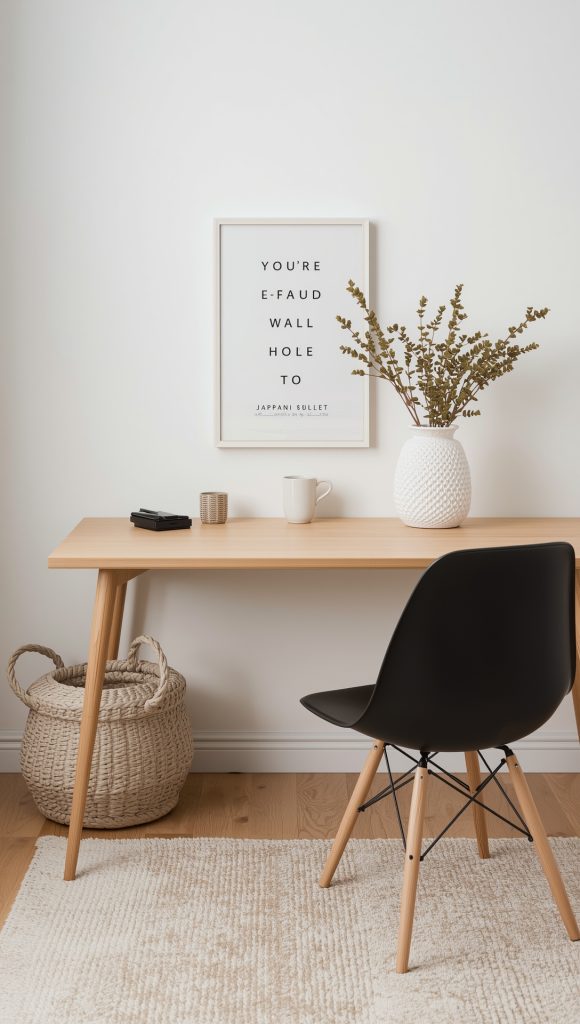
Finally, don’t forget you! Japandi doesn’t mean soulless—it means curated personality. Add small personal touches without cluttering your space.
Ways to Personalize
- A framed photo or minimalist art print.
- Your favorite ceramic coffee mug.
- A single inspirational quote on the wall.
Ask yourself: Does this object make me happy or calm? If yes, keep it. If no, bye-bye.
Final Thoughts: Ready to Go Japandi?
Designing a Japandi office isn’t about following strict rules—it’s about creating a space that feels calm, functional, and authentically you. From neutral palettes and natural textures to intentional decor and functional storage, these 10 Japandi office ideas can totally transform your work-from-home vibe.
Honestly, the first time I switched to this style, I noticed I was less stressed and way more focused. So why not give it a shot? Start small—maybe with a plant and a neutral rug—and see how it feels.And hey, if you nail your Japandi home office design, don’t be surprised when your friends ask, “Wow, how do I make my desk look like that?”