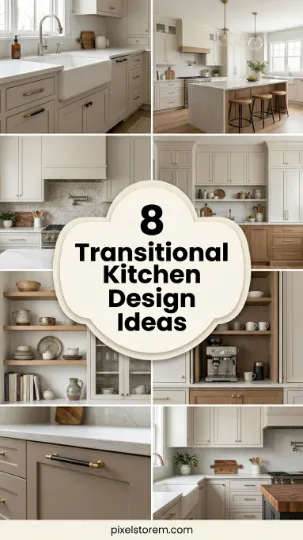
8 Transitional Kitchen Design Ideas: Where Classic Meets Contemporary
Let’s be honest—kitchen styles can feel like choosing between two very opinionated friends. On one hand, you’ve got your classic, cozy, traditional kitchens. On the other? Sleek, modern spaces with minimalist everything. But what if I told you there’s a magical middle ground?
Yep, I’m talking about Transitional Kitchen Design—aka the sweet spot where old-school charm and modern flair hang out together in perfect harmony.
As someone who’s been through the whole “should I go rustic or go modern?” dilemma (more than once, FYI), I can tell you: transitional kitchens are the way to go. They’re functional, stylish, and so dang flexible it’s wild. Whether you’re renovating, building new, or just browsing for inspo, these 10 transitional kitchen ideas will have you dreaming of the ultimate blended style kitchen.
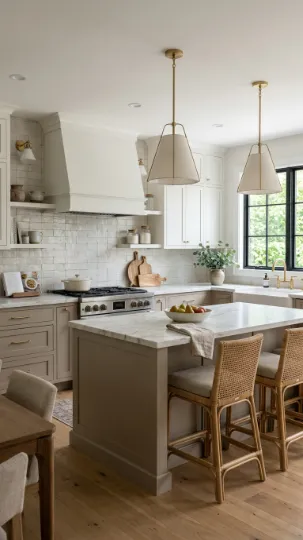
1. Keep It Neutral, But Not Boring
One of the first things you’ll notice in a transitional kitchen? Neutral kitchen design is the name of the game. But don’t worry—it doesn’t mean plain or sterile.
Why Neutrals Work So Well:
- They let other elements (like lighting or textures) shine.
- They’re timeless—no trend burnout here!
- They’re super easy to update with seasonal or trendy accessories.
Pro Tip: Mix whites, greys, taupes, and even soft blues to create depth without overwhelming the space. Add interest with textured backsplash tiles or two-tone cabinetry.
2. Blend Cabinets Like a Pro
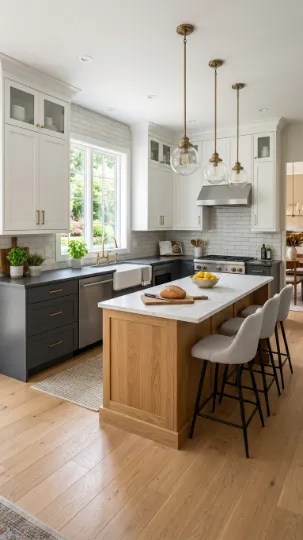
Modern traditional kitchen vibes start with your cabinets. Instead of choosing between shaker-style wood cabinets and sleek flat-panel ones, why not use both?
Try These Combos:
- Upper cabinets in classic white shaker, lower ones in matte charcoal flat panels
- Natural wood island with surrounding modern painted cabinets
- Glass-front doors to keep it light and open
Bold move: Go for two-toned cabinetry in complementary shades. It adds visual interest and keeps the space from feeling too matchy-matchy.
3. Countertops: Quartz Meets Character
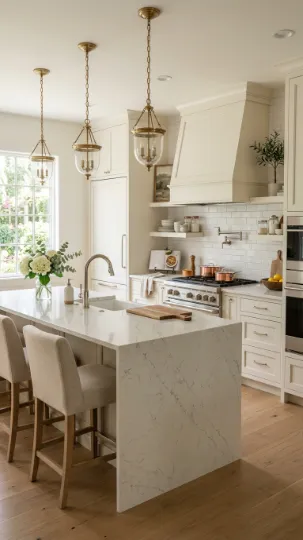
Stone lovers, gather ‘round. Transitional kitchens typically use quartz or marble-look countertops—but with a twist.
What to Look For:
- Subtle veining to give that natural stone feel
- Clean edges with just a touch of bevel
- Matte or honed finishes for that soft, elegant look
IMO, this is where you really see that modern + traditional mix come to life. It’s functional, but still has character.
4. Lighting That Tells a Story
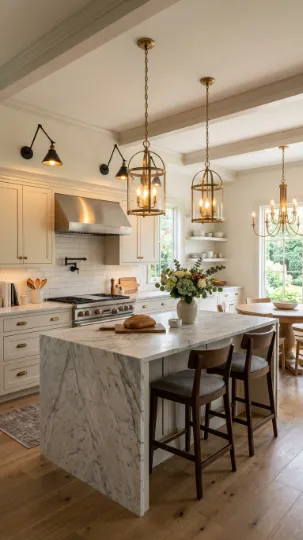
You’ve got your base design, now let’s light it up—literally. Lighting is key in transitional design because it blends form and function like a total boss.
Best Fixtures for Transitional Kitchens:
- Lantern pendants over the island for a classic nod
- Matte black sconces for a modern industrial touch
- Brass chandeliers with clean lines = chef’s kiss
Remember: Your lighting can be a statement piece and practical. Go big or go home, right?
5. Islands That Work Overtime
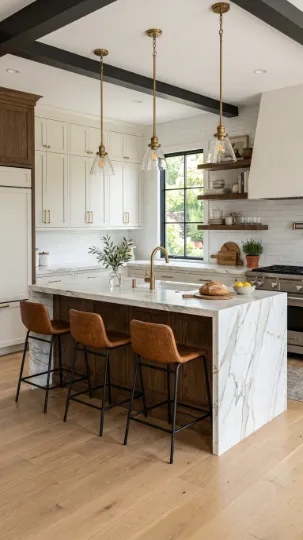
No transitional kitchen is complete without an island. Not only is it a major design anchor, but it’s also where you meal prep, drink wine, help with homework—you name it.
Design Tips:
- Add paneling or molding for that traditional twist
- Use waterfall edges or contrasting countertop material to modernize
- Consider open shelving or built-in wine racks
And hey, if it seats four and hides your trash can? Ever better.
6. Hardware That Walks the Line
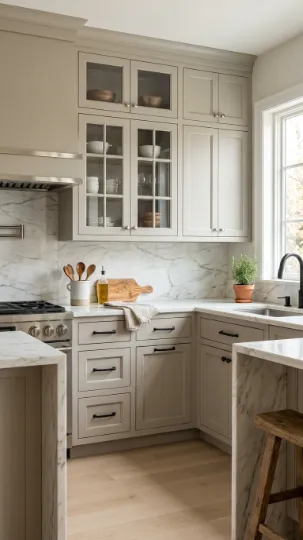
Let’s talk knobs and pulls. Hardware in transitional kitchens strikes a perfect balance—nothing too ornate, but also not ultra-sleek and invisible.
Best Bets:
- Brushed nickel (hello, timeless)
- Matte black for bold contrast
- Champagne bronze if you’re feeling fancy
Mix and match for a curated, not “catalog” look. Think of it like accessorizing your favorite outfit!
7. Floors That Ground the Look
You don’t want your flooring screaming “rustic” or whispering “modern” either. Instead, go for something that quietly supports the whole aesthetic.
Transitional Flooring Faves:
- Wide-plank oak (bonus points for a natural finish)
- Herringbone pattern for subtle traditional flair
- Large-format porcelain tile that mimics stone
Keep it simple but intentional. It sets the tone without stealing the show.
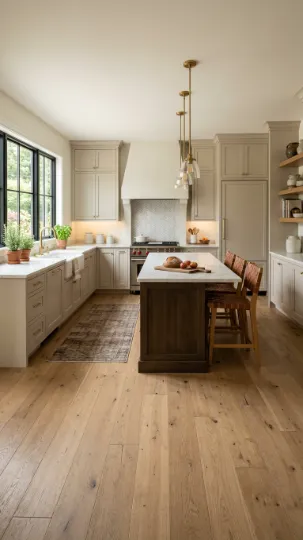
8. Mixing Materials Like a Designer
Want to level up your transitional kitchen ideas? It’s all about the mix. Combining metal, wood, stone, and glass adds layers and interest.
How to Nail It:
- Pair warm wood shelves with cool marble counters
- Combine matte black fixtures with brass hardware
- Use textured tiles next to smooth cabinetry
This is the part that makes your kitchen look like it came out of a magazine—not a big box store catalog.
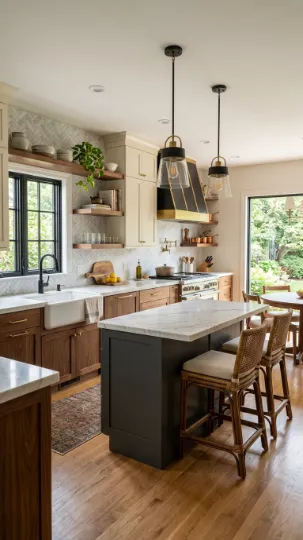
9. Appliances That Disappear (In a Good Way)
Sure, you love your double-door fridge, but do you want it front and center? Transitional kitchens often favor paneled appliances that blend seamlessly into the cabinetry.
Appliance Tips:
- Choose integrated refrigerators and dishwashers
- Use sleek modern ranges with old-school hoods
- Don’t be afraid to hide the microwave (trust me, it’s better)
This keeps the focus on design, not tech—perfect for a blended style kitchen.
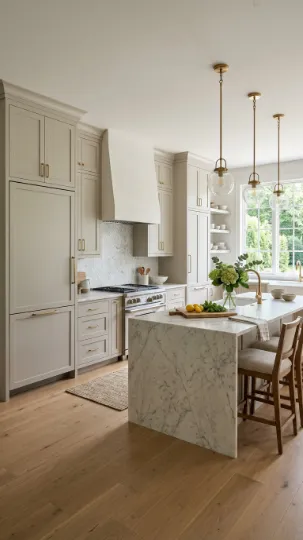
10. Personal Touches That Make It Yours
Last but definitely not least—add some YOU into your space. Transitional doesn’t mean bland; it means balanced.
Think:
- Open shelving with your favorite cookbooks or pottery
- A pop of color through stools, rugs, or wall art
- Framed vintage recipes or family photos
Your kitchen should feel like home, not just a Pinterest board. And hey, if it makes you smile every time you walk in? That’s a win.
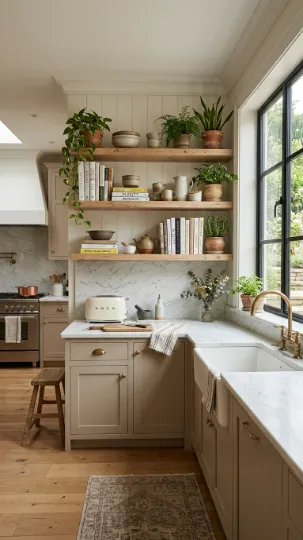
Final Thoughts: Transitional = Total Vibes
So, what’s the takeaway here? Transitional kitchen design is all about balance. It’s where the comfort of tradition meets the clean edges of modern design. It’s a style that gives you the best of both worlds—and lets you make it entirely your own.
Let’s recap what makes transitional kitchens so dreamy:
- Neutral tones keep it fresh and timeless
- Mixed materials and blended cabinetry create visual depth
- Smart lighting, practical islands, and intentional touches make it functional and fab
If you’re torn between modern and traditional, why not have both? Transitional design says you totally can.
So, what’s your favorite transitional kitchen element? Thinking about doing a full makeover or just a mini refresh? Either way, I’d love to hear your thoughts—and hey, don’t forget to save this for your next kitchen inspo session.